
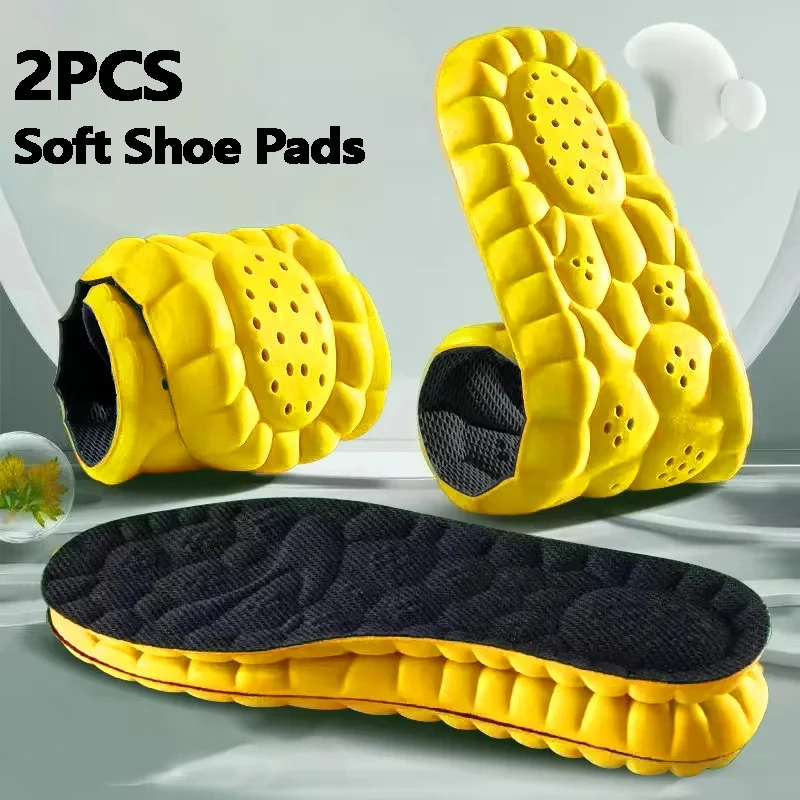
We have all been there: you buy a sharp pair of sneakers or work shoes, only to discover after an hour of walking that the factory insoles feel like thin strips of cardboard. By the end of the day, your arches ache, your heels feel bruised, and your knees take the brunt of every single stride.
Before you toss those shoes or shell out $40 to $80 for high-end branded orthotics, there is a remarkably cheap alternative taking budget circles by storm. We put the 4D Sports Insoles to the test to see if a pair of insoles costing under $2 can actually provide meaningful relief.
Why It’s a Steal
At approximately $1.92, calling these insoles affordable is an understatement. Name-brand athletic inserts routinely sell for $15 to $35, yet many use standard EVA foam that compresses into a flat pancake within weeks. These budget 4D insoles feature resilient PU (polyurethane) construction that provides lasting rebound without emptying your wallet.

Just like our favorite low-cost fitness gear where you can Save Your Joints for $7: Thick Yoga Knee Pad Mat Review, protecting your body shouldn’t require a massive budget. At less than the price of a cup of drip coffee, you can upgrade multiple pairs of work boots, running kicks, and everyday beaters for under ten bucks total.
Key Features Deep Dive
1. 4D Contoured Arch & Heel Cradle
Flat insoles allow your foot to roll inward, causing plantar fascia strain and misaligning your ankles. These insoles feature a sculpted deep heel cup and raised medial arch support that keeps your foot centered with every footstrike. The gentle contouring relieves tension across your plantar ligament, giving you noticeable stability during high-impact movement.
2. High-Elasticity PU Shock Absorption
Instead of cheap, open-cell foam that collapses immediately, these insoles utilize a denser PU sole core. The material functions like mini shock absorbers under your metatarsals and heels. Every time your foot hits pavement, the material dampens vibration and disperses pressure outward, sparing your joints from repeated pounding.
3. Breathable Anti-Odor Top Fabric
Sweaty feet mean slipping, blisters, and unpleasant odors. The top surface is covered with a soft, moisture-wicking textile with tiny micro-perforations. This setup promotes internal airflow through your shoe, keeping your socks drier through long shifts or intense training sessions.
Who Is This For?
These inserts are tailor-made for anyone who spends long hours on their feet on hard surfaces:
- Retail, Hospitality, and Warehouse Workers who log 10,000+ steps a day on concrete floors.
- Budget Runners and Gym-Goers looking to inject extra cushioning into older running sneakers.
- Commuters & Students who walk heavy distances daily and want instant relief without spending big.
✅ Pros
- Unbeatable value at under $2 a pair
- Solid arch contouring and deep heel cup for stability
- Trimmable toe area fits virtually any shoe size
- Noticeable PU shock absorption right out of the box
- Breathable, anti-sweat top layer
🔻 Cons
- Adds thickness; may feel tight in narrow or low-profile shoes
- Not a medical-grade substitute for severe flat-foot conditions
- Requires trimming to achieve a perfect custom fit
Final Verdict
Are these going to outperform a $200 custom orthotic molded by a podiatrist? No, and expecting that for $1.92 would be unrealistic. But if you compare them to the flimsy factory liners in your current sneakers—or even standard $15 pharmacy insoles—the 4D Sports Insoles punch far above their weight class.
They bring immediate comfort, shock mitigation, and arch support to worn-out footwear. If your feet are aching by mid-afternoon, grabbing a couple of pairs to revive your daily footwear rotation is an absolute no-brainer.
Frequently Asked Questions
How do I get the right size for my shoes?
These insoles come with printed cut-lines along the toe section. The easiest method is to remove the factory insole from your shoe, align it with the 4D insole, and trim around the top with sharp scissors for a perfect fit.
Should I put them on top of my existing shoe insoles?
For the best comfort and fit, remove your shoe’s original factory insoles first. Stacking them on top can make your shoe too tight and squeeze the top of your toes.
How long do they last before wearing out?
Depending on your daily step count and body weight, a pair typically maintains optimal rebound for 3 to 6 months of daily use. Given the sub-$2 price point, replacing them a couple of times a year is extremely cost-effective.
Check Best Price ➔
*Price may vary based on promotions.


